Capital isn’t scarce. A place on the wires is.
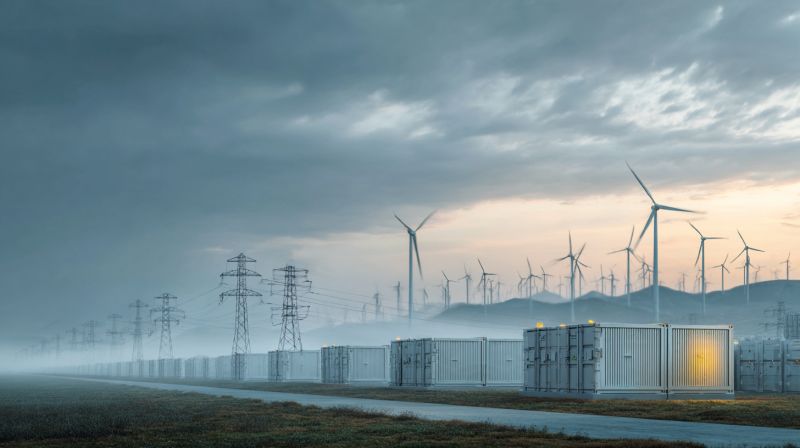
James rang on Friday, an hour after the Kilmarnock South news.
“€270m. 350 MW, four hours, 1.4 GWh, running by early 2028. Days after 400 MW at Hunterston closed its financing. Tell me again that storage is short of capital.” It isn’t. The money has arrived - in Ayrshire, in very large pieces, on the transmission network.
“And the catch?”
Look at what the regulator did in the same fortnight. Ofgem is minded to charge batteries for holding a place in the connection queue: £3,000 per MW to start, rising to £25,000 if it stays crowded. Roughly 90 GW of batteries are built or queued against a need of about 29 GW by 2035. Its consultation closed on Thursday.
“So the placeholders drop out and the real projects get built. Sounds healthy.”
It is. It also tells you what’s actually scarce. Not capital. Not batteries. A place on the wires. And that place now has a price the biggest balance sheets can afford to pay.
“Which leaves everyone else where?” Asking a different question.
Those big batteries soak up surplus Scottish wind and hand it back when the network has room. Good. But they still have to export through the same wires, and a windy spell up north doesn’t conveniently end after four hours.
Further up the network, there are nodes where the power is simply there, hour after hour, with nowhere useful to go. Another exporter only does so much. A user is different.
Put a few megawatts of containerised compute there, six to eight hours of storage alongside it, and software deciding where the value lies at any given moment: computing, riding through, or supporting the grid.
“Small, though.”
Small, repeatable, and not waiting for anyone’s 2028. Site by site.
“So the giants shift the surplus and you consume it.”
We need both, and soon. Volatility is rising faster than the wires can be built, and every month without enough storage is paid for in curtailment.
If a place on the wires now has a price, what is load worth when it sits where the power already is?