How many hours can Britain’s batteries actually store?
Mark sent me the trade body’s numbers on Wednesday.
“8.7 gigawatts operating, nine more being built, up a fifth in a year. When do we stop saying Britain needs more storage?”
Not yet. Those 8.7 gigawatts hold 14.1 gigawatt-hours. Fully charged, the fleet can run flat out for a little over an hour and a half. Against average national demand, that is less than half an hour’s supply.
“And what’s coming?”
The 9.1 gigawatts under construction hold 19 gigawatt-hours: just over two hours, arriving over the next three years. A 300-megawatt, two-hour site in Norfolk finished construction on Tuesday, sharing a connection with the wind farm next door.
“So durations are creeping up.”
They are, though the much longer-duration projects are years away. A Highland pumped-hydro scheme secured investment on Monday: 40 gigawatt-hours, nearly three times the energy capacity of the country’s batteries combined, with twenty-two hours at full output. It is pencilled in for 2033. The regulator’s wider list of long-duration schemes is due between 2030 and 2033.
“What’s in between?”
A handful of four-hour sites, and promises. A windy spell behind a constrained grid boundary can last for days. Two hours of storage absorbs some of that surplus; once it is full, the wind is still blowing and generation has to be curtailed.
“So the answer is a longer battery?”
Up to a point. Behind a boundary already at capacity, an eight-hour battery buys more time than a two-hour one. It still ends up sitting full if the wind carries on and the power has nowhere to go.
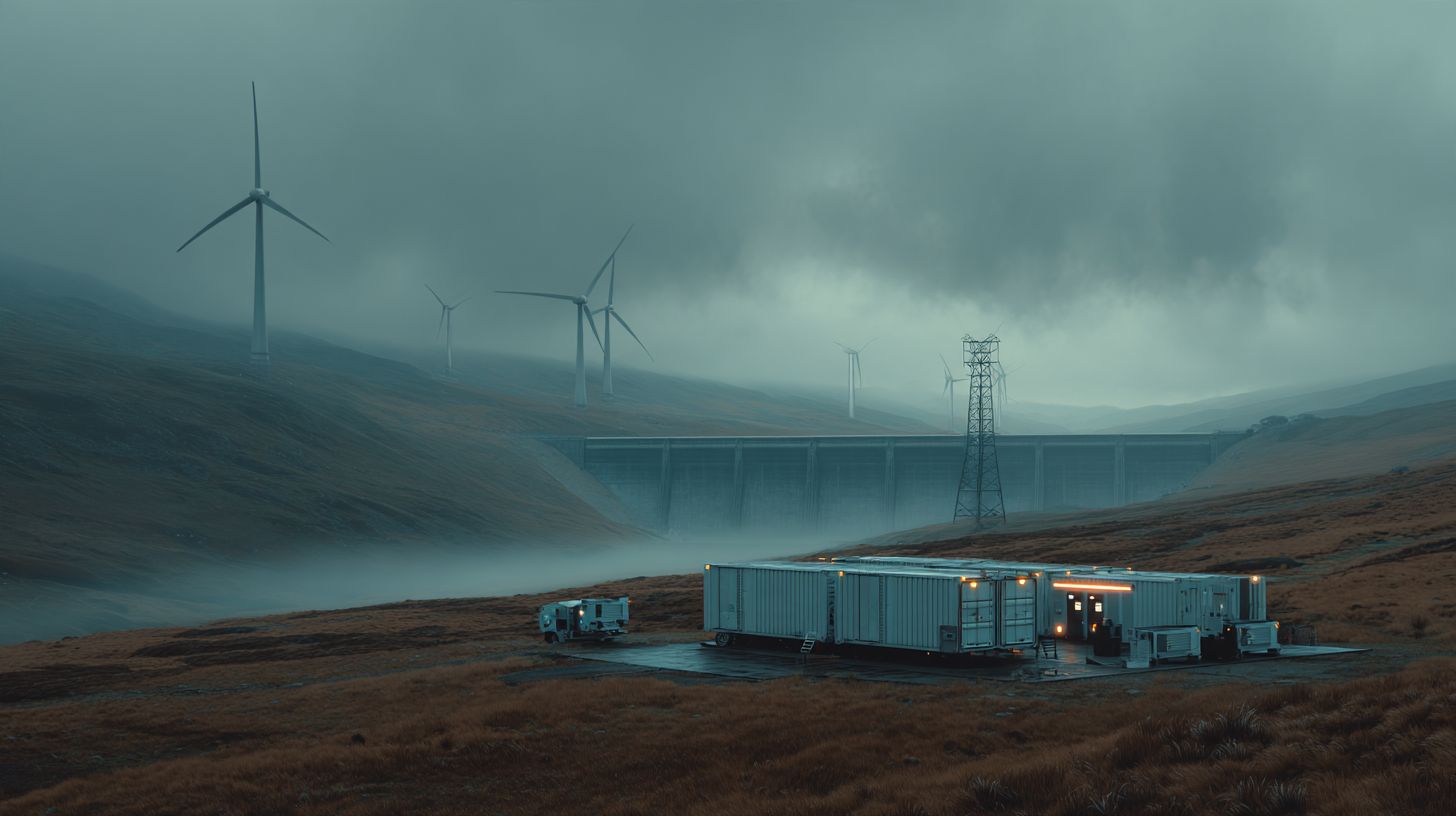
A load at the same node changes that calculation. Put six to eight hours of storage beside a few megawatts of containerised compute, with software deciding hour by hour whether to use the energy in the servers, hold it for a lull or sell it to the system. The battery takes power that cannot get through the grid constraint, and the compute draws it down locally, making room for more.
“And the rest of the list?”
Build it, all of it, faster. Volatility is rising faster than grid capacity, and a project commissioning in 2029 cannot help next February.
For a site being sized this winter, I’d want to know how many hours it can store - and what will draw that energy down if the export route stays full.